NEW PUBLICATION
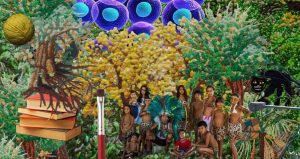
JULIANA WEXEL AND MIRIAN TAVARES’ ESSAY PUBLISHED IN CLIMACOM CULTURA CIENTÍFICA MAGAZINE
Juliana Wexel, FCT-CIAC research fellow and doctoral student in Digital Media Arts, together with Mirian Tavares, Associate Professor at UAlg and Coordinator of CIAC, sign the essay “Interactive uninstallation ivagination and its flows: an autogynographic creation in site-specific in times of planetary social distancing“, recently published in the dossier “Coexistence and Cocreations” of the ClimaCom Cultura Científica magazine.
The work entitled des-instalação ivagination [ivagination un-installation] is an interactive digital artifact developed from a proposal of an immersive experience, in site-specific, which partially transformed the provisional home of artist Juliana Wexel, in Lisbon, into a woman’s body. The essay describes part of the creation process of the work ivagination, the artistic, aesthetic and relational motivations applied in the experience and highlights the presence of two distinct notions of flow: the allusion to the flow of the menstrual cycle and, therefore, the importance of the audience interactivity flow in order to complete this immersive artistic experience.
The development of this computer art project is part of the field of scientific research practices based on an artistic and technological project. Developed in the context of DMAD’s Computational Art Project, the work ivagination was part of the online edition of 2020 Doctoral Retreat and was exhibited at ARTeFACTo 2020 – International Congress on Digital Creation in the Arts and Communication. In ClimaCom Cultura Científica magazine, the short doc is part of the “Art” section.
The dossier “Coexistence and Cocreation”, organized by Susana Dias, Carolina Rodrigues, Karolyne de Souza and Larissa Bellini (State University of Campinas, São Paulo, Brazil), brings together different articles, essays, reviews, journalistic texts and artistic and cultural productions that pay attention to cohabitations, co-conspiracies and co-evolutions. The texts summon thoughts and practices of co-learning processes, in different areas, with different agents and different ways of thinking and inhabiting the world.